Osteoporosis is often called "the silent disease" — it progresses without noticeable symptoms until a fracture occurs. But what many people don't realize is that the speed at which their bones lose density over a lifetime depends, in large part, on their DNA. Twin studies estimate that between 60% and 80% of the variation in bone mineral density is genetically determined, making osteoporosis one of the chronic conditions with the highest known hereditary component.
Understanding the genetic basis of bone health is not merely an academic exercise — it is a powerful tool for personalized prevention. People with risk variants in VDR, LRP5, COL1A1, or ESR1 may need earlier interventions, more aggressive supplementation, and more frequent monitoring — regardless of whether they have a clinical "family history" of osteoporosis. This article explores the genetic mechanisms behind bone health and what modern science reveals about personalized prevention and screening.
Key fact: Osteoporosis affects approximately 200 million people worldwide and is responsible for more than 8.9 million fractures per year globally, according to the International Osteoporosis Foundation (IOF, 2023). It is estimated that 1 in 3 women over 50 and 1 in 5 men in the same age group will suffer an osteoporotic fracture during their lifetime — and genetics is the primary determinant of who ends up in that group.
How Bones Are Built and Maintained
The human skeleton is a living tissue in constant renewal. At every moment, specialized cells called osteoblasts build new bone matrix, while osteoclasts reabsorb it. This process of bone remodeling is regulated by hormones, nutrients, physical activity, and — crucially — by genetic signals that determine the efficiency of each step. Bone mineral density (BMD) reflects the balance between formation and resorption over time.
Peak bone mass is typically reached around ages 25 to 30. After that point, there is a tendency for gradual slight decline, which accelerates significantly in women during and after menopause (due to falling estrogen levels) and more slowly in men. Genes that influence peak bone mass, the rate of post-peak decline, and the hormonal response determine, to a large extent, whether a person will reach old age with healthy or fragile bones.
The Genes of Bone Health: Mechanisms and Evidence
VDR — The Vitamin D Receptor and Bone Mineralization
The VDR gene (Vitamin D Receptor) is probably the most studied gene in relation to bone health. It encodes the protein that receives the signal from active vitamin D (calcitriol) inside cells — including osteoblasts. When vitamin D binds to its receptor, it activates the transcription of genes that regulate intestinal calcium absorption, bone matrix mineralization, and osteoblast differentiation.
There are multiple functional polymorphisms in the VDR gene, the most studied being FokI (rs2228570), BsmI (rs1544410), ApaI (rs7975232), and TaqI (rs731236). A meta-analysis published in the Journal of Bone and Mineral Research (Thakkinstian et al., 2004), covering more than 26,000 participants, demonstrated that certain VDR haplotype combinations are associated with reductions of 4–8% in femoral neck BMD — a clinically significant difference that may determine a crossing into the osteopenia or osteoporosis threshold decades earlier.
Carriers of lower-responsiveness VDR variants also show reduced efficiency of intestinal calcium absorption even with adequate intake, meaning that standard dietary calcium recommendations may be insufficient to maintain bone density over time. For these individuals, both vitamin D supplementation and calcium intake may need to be set above standard population recommendations.
LRP5 — The Key Gene in Bone Formation
The LRP5 gene (Low-Density Lipoprotein Receptor-Related Protein 5) is a co-receptor in the Wnt signaling pathway, which is the primary route for activating osteoblasts and regulating bone formation. Loss-of-function mutations in LRP5 cause the osteoporosis-pseudoglioma syndrome, a rare and severe form of juvenile osteoporosis. Conversely, gain-of-function mutations produce extraordinarily high bone densities — documented cases of individuals with virtually no fractures across their entire lifetime.
Common polymorphisms in LRP5 — especially rs3736228 (A1330V) — have been consistently associated with significant variations in BMD across multiple ethnic populations. A landmark study published in the New England Journal of Medicine (Little et al., 2002) was among the first to establish that LRP5 variants explain a substantial portion of population variation in bone mass. A subsequent meta-analysis with more than 37,000 participants (Rivadeneira et al., Nature Genetics, 2009) confirmed LRP5 as one of the genetic loci with the largest effect on BMD outside of rare monogenic mutations.
The Wnt/LRP5 pathway also interacts with environmental factors: weight-bearing physical activity (running, strength training, impact sports) specifically activates this signaling pathway. Carriers of lower-activity LRP5 variants may need greater mechanical stimulation — more resistance training — to achieve the same osteogenic effect that people with high-activity variants obtain with moderate effort.
COL1A1 — Collagen and the Structural Strength of Bone
The COL1A1 gene encodes the alpha-1 chain of type I collagen, the primary structural protein of the bone matrix — responsible for approximately 90% of the organic component of bone. Type I collagen is the "scaffolding" onto which minerals are deposited: without an adequate collagen matrix, even highly mineralized bone becomes brittle rather than strong.
The most studied polymorphism in COL1A1 is the Sp1 binding site (rs1800012), a G→T substitution in the first intron that creates an additional binding site for the transcription factor Sp1, increasing expression from the T allele. Carriers of the T allele (especially TT homozygotes) exhibit an imbalance in the ratio of alpha-1 and alpha-2 chains of type I collagen, resulting in a structurally more fragile bone matrix. A meta-analysis with more than 20,000 participants (Bone, Efstathiadis et al., 2001) showed that TT carriers have a 2.97 times higher risk of vertebral fracture compared to GG carriers, independent of BMD measured by densitometry — demonstrating that the structural risk from COL1A1 goes beyond simple density measurement.
ESR1 — The Estrogen Receptor Gene and Hormonal Protection
The ESR1 gene (Estrogen Receptor Alpha) encodes the receptor through which estrogen exerts its protective effects on bone. Estrogen inhibits osteoclastogenesis (the formation of bone-resorbing cells) and stimulates osteoblast activity — which is why the loss of estrogen at menopause is so devastating for bone density. But how much bone responds to available estrogen depends, in part, on the efficiency of the receptor encoded by ESR1.
The most studied polymorphisms are PvuII (rs2234693) and XbaI (rs9340799). Studies in postmenopausal women have shown that lower-responsiveness ESR1 variants are associated with faster bone loss after menopause and reduced protective response to hormone replacement therapy (HRT). A study published in the Journal of Clinical Endocrinology & Metabolism (Sowers et al., 2006) followed 543 women for 6 years through the menopausal transition and found that specific ESR1 haplotypes accounted for up to 11% of individual variation in BMD loss during that period — a significant genetic contribution to a phenomenon widely regarded as "merely hormonal."
RANK/RANKL — The Bone Resorption Pathway
The genes TNFRSF11A (RANK) and TNFSF11 (RANKL) encode the primary pathway for osteoclast activation — the cells that resorb bone. The RANK/RANKL system is the therapeutic target of denosumab, a monoclonal antibody widely used in the treatment of osteoporosis. Genetic variants in this axis influence the baseline rate of bone resorption and the inflammatory response that accelerates bone mass loss in conditions like rheumatoid arthritis and inflammatory bowel disease. Polymorphisms in TNFRSF11A (rs3018362 and rs884205) have been associated with BMD variations in large genome-wide association studies (GWAS), reinforcing the central role of this pathway in the genetic control of bone health.
Comparative Overview: Key Genes in Bone Health
| Gene | Function | Impact on Bone Density |
|---|---|---|
| VDR | Vitamin D receptor; regulates calcium absorption and bone mineralization | Low-responsiveness variants reduce femoral neck BMD by 4–8%; reduced calcium absorption efficiency |
| LRP5 | Wnt pathway co-receptor; activates osteoblasts and regulates bone formation | A1330V variant (rs3736228) associated with lower BMD; gain-of-function variants produce very high bone density |
| COL1A1 | Alpha-1 chain of type I collagen; structural component of bone matrix | T allele (Sp1, rs1800012) increases vertebral fracture risk up to 2.97× independent of BMD |
| ESR1 | Estrogen receptor alpha; mediates hormonal protection of bone | Lower-responsiveness haplotypes accelerate post-menopausal bone loss; reduced HRT response |
| RANK/RANKL | Osteoclast activation pathway; controls rate of bone resorption | TNFRSF11A variants associated with greater resorption and lower BMD in GWAS studies |
Practical Implications: What to Do With This Information
Personalized Nutrition for Bone Health
Standard calcium recommendations (1,000–1,200 mg/day for adults) and vitamin D guidelines (600–800 IU/day) were developed for the general population. But for carriers of low-responsiveness VDR variants, these amounts may be insufficient. Growing evidence suggests that these individuals may need serum vitamin D levels between 40–60 ng/mL (versus the 20 ng/mL considered sufficient for the general population) to maintain adequate calcium absorption and bone health. Calcium from diverse food sources (dairy products, dark leafy vegetables, legumes, canned fish with bones) is always preferable to isolated supplementation, but in people with unfavorable genetic variants, a combination approach may be necessary.
Other nutrients with documented influence on bone health include vitamin K2 (which directs calcium to bones and prevents arterial calcification), magnesium (a cofactor in converting vitamin D to its active form), zinc, and high-quality proteins. Protein-restricted diets — historically recommended to "reduce acidosis" — have been revisited: recent evidence shows that adequate protein is essential for bone collagen synthesis and does not harm BMD when calcium intake is sufficient.
Exercise as Bone Medicine
Not all exercise is equal from a bone health perspective. The most effective forms are those that impose mechanical load on the skeleton: walking on varied terrain, running, strength training, dancing, impact sports. Swimming and cycling, despite being excellent for cardiovascular health, have minimal impact on BMD because they generate little mechanical bone loading. For carriers of lower-activity LRP5 variants, progressive resistance training (weight training with increasing loads) is especially important, as it is the most potent stimulus for the Wnt/LRP5 pathway.
The most critical window for building bone mass is adolescence and early adulthood (before age 30), when peak bone mass is still being formed. Interventions during this phase yield far greater returns than those initiated after age 40. But even in older individuals, regular resistance exercise has been shown to be capable of increasing BMD by 1–3% per year — which can make the difference between remaining above the osteopenia threshold or crossing it.
Screening and Monitoring
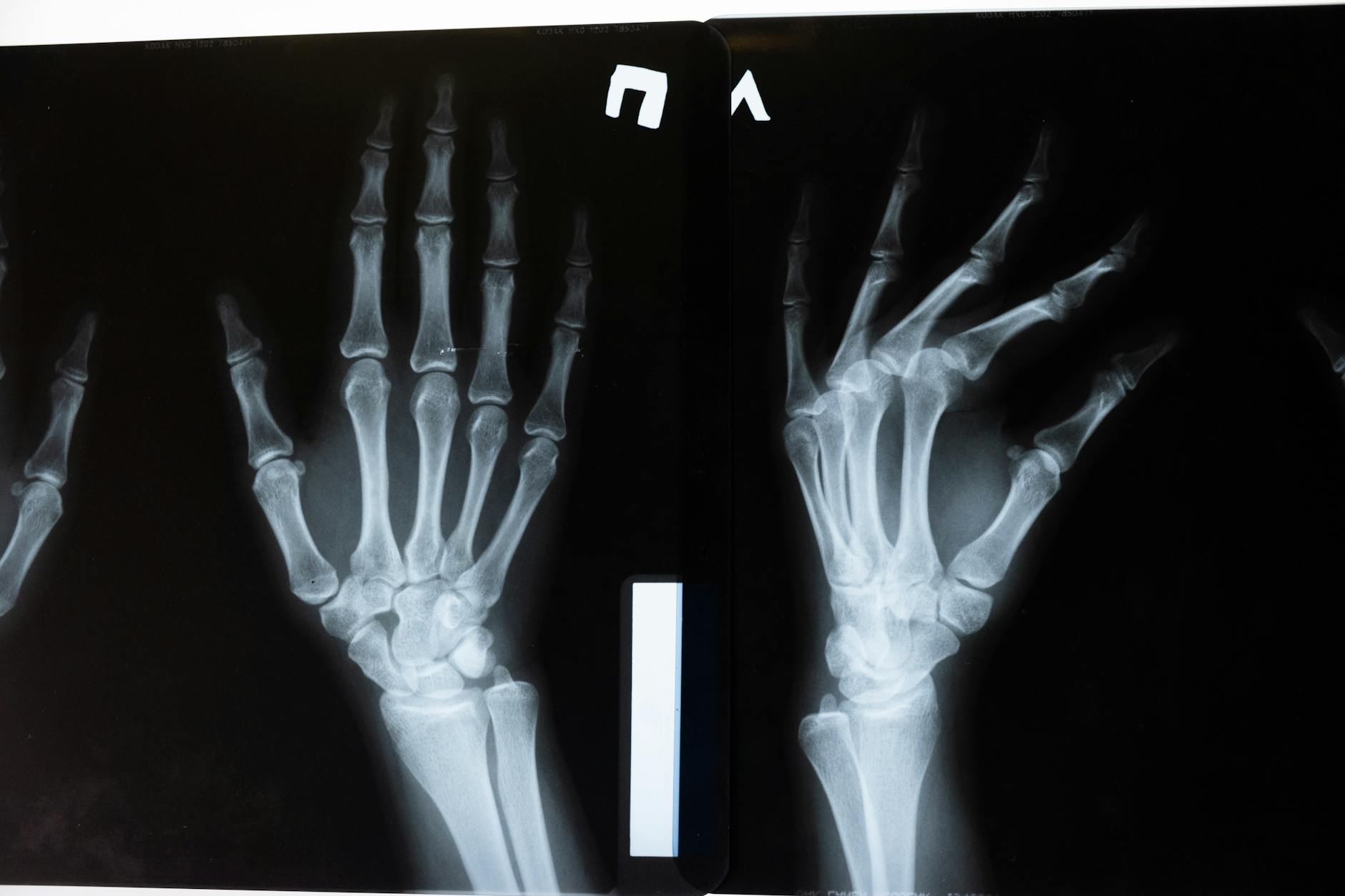
Bone densitometry (DEXA) is the gold standard for assessing BMD, but conventional guidelines recommend starting it only at age 65 for women and later for men. For carriers of high-risk genetic variants — especially unfavorable combinations in VDR, COL1A1, and ESR1 — starting screening at age 40–50 may be more appropriate, enabling early interventions before bone loss reaches critical levels. Genetic assessment can therefore guide a truly personalized, cost-effective screening strategy.
What helixXY Can Reveal
The helixXY genetic report analyzes variants in genes directly linked to bone health, including VDR, LRP5, COL1A1, and ESR1. Based on your individual genetic profile, you receive information about:
- Your genetic predisposition to low bone mineral density and osteoporosis risk
- Your efficiency in intestinal calcium absorption and vitamin D activation
- The structural quality of your bone collagen matrix and fracture risk independent of BMD
- Your hormonal response to estrogen and its implications for post-menopausal bone health
- Personalized recommendations for nutrition, supplementation, and exercise based on your genotype
Knowing your bone genetics before symptoms appear is the difference between effective prevention and delayed treatment. helixXY transforms complex genetic data into practical, actionable guidance so you can care for your bones the right way — for your DNA.
Important: helixXY reports are informational and educational. Consult a healthcare professional for personalized clinical interpretation and medical guidance.
References
- Thakkinstian A, et al. "Vitamin D receptor gene polymorphisms are associated with bone mineral density." Journal of Bone and Mineral Research. 2004;19(7):1229–1237.
- Rivadeneira F, et al. "Twenty bone-mineral-density loci identified by large-scale meta-analysis of genome-wide association studies." Nature Genetics. 2009;41(11):1199–1206.
- Efstathiadis G, et al. "COL1A1 Sp1 polymorphism, bone mineral density and fracture risk." Bone. 2001;28(5):539–543.
- Sowers MR, et al. "Estrogen receptor gene polymorphisms and bone loss in late reproductive-age women." Journal of Clinical Endocrinology & Metabolism. 2006;91(5):1654–1660.
- International Osteoporosis Foundation. "Osteoporosis Facts and Statistics." IOF Global Report, 2023. Available at: www.osteoporosis.foundation.