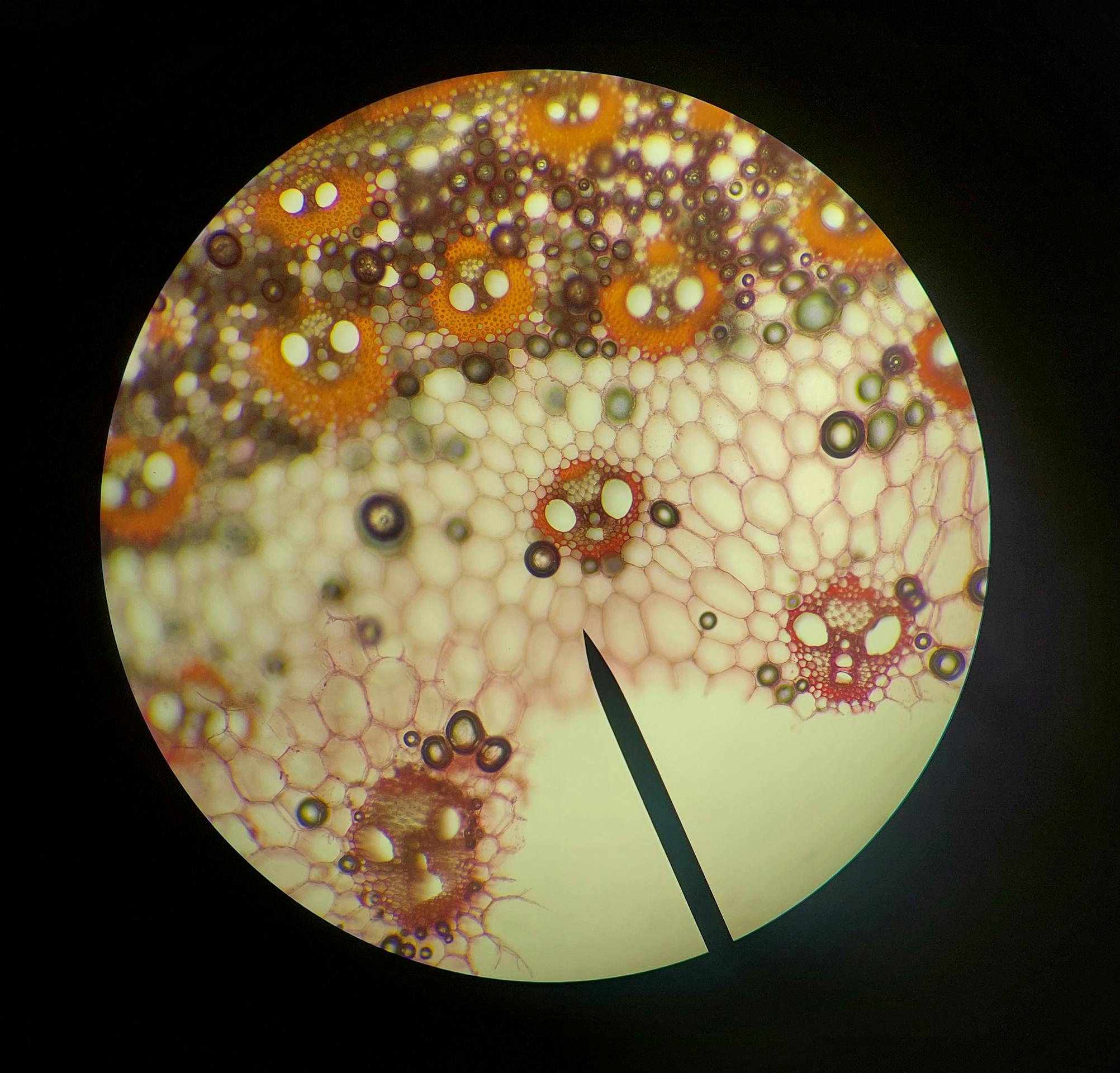
One of the few autoimmune diseases with near-deterministic genetics: no HLA-DQ2 or DQ8, no celiac disease.
helixXY precisely identifies your HLA-DQ2.5, DQ2.2 and DQ8 haplotypes — along with 4 additional non-HLA loci (IL2-IL21, CCR3, SH2B3, TAGAP) that modulate risk in positive carriers.
Celiac Disease is an autoimmune enteropathy triggered by gluten ingestion (in wheat, barley, and rye) in genetically susceptible individuals. The result is destruction of intestinal villi, malabsorption of nutrients, and a cascade of clinical manifestations — diarrhea, anemia, osteoporosis, infertility, neurological symptoms.
The peculiarity of CD is that genetic susceptibility is virtually mandatory: HLA-DQ2 and HLA-DQ8 haplotypes are present in ~99% of patients. This makes the genetic test the exam with the highest negative predictive value in all of internal medicine — those without DQ2 or DQ8 can rule out the disease with nearly absolute confidence.
helixXY precisely identifies your haplotypes and integrates 4 additional non-HLA loci that help stratify the actual risk in positive carriers.
Absence of DQ2 and DQ8 rules out CD with ~99% confidence. In families with a history, this means an end to uncertainty for children who didn't inherit the haplotypes.
Having DQ2/DQ8 doesn't mean having CD. ~30% of the population has the haplotype, but only ~1% develops the disease. Non-HLA loci, microbiota, and environmental factors determine who progresses.
Use your file from 23andMe, Genera, AncestryDNA, etc. Within 15 minutes of upload, your report is ready — no new sample required.
For confirmed carriers, a gluten-free diet is the only treatment — and it works: 70% of patients have complete villous healing within 1–2 years.
Photo by Heather Brock on Pexels
GWAS meta-analyses with over 25,000 cases consolidated the genetic architecture of Celiac Disease — making the HLA test the complementary exam with the highest diagnostic precision.
Photo by Lidija Ostojić on Pexels
Complete coverage of HLA-DQ2 and DQ8 haplotypes — disease-defining — alongside the main non-HLA risk modulators.
The HLA-DQ2.5 haplotype (DQA1*05:01-DQB1*02:01) is the primary genetic determinant of Celiac Disease. Present in ~30% of the general population but ~95% of celiac patients. It presents gliadin-derived peptides (deamidated by tissue transglutaminase, TTG) to CD4+ T lymphocytes, triggering the autoimmune response.
The HLA-DQ8 haplotype (DQA1*03:01-DQB1*03:02) is the second most important locus. Present in ~5% of pure cases and ~6% of DQ2-negative cases. When DQ8 is present without DQ2, risk is lower than with DQ2.5, but disease can still manifest — hence the importance of testing both.
Region 4q27 containing the IL2 and IL21 genes — central T-helper response cytokines. The strongest non-HLA locus for Celiac Disease. Variants in this region amplify inflammatory signaling after gluten exposure in DQ2/DQ8 carriers.
Chemokine receptors involved in eosinophil and monocyte migration to the intestinal mucosa. The 3p21.31 region contains multiple chemokine genes (CCR1, CCR2, CCR3, CCR5) whose variants modulate the inflammatory infiltration characteristic of celiac villous atrophy.
SH2B Adaptor Protein 3 (LNK) — negative regulator of cytokine and growth factor signaling. The R262W variant (rs3184504) is shared with several autoimmune diseases (T1D, rheumatoid arthritis). Acts on the balance between tolerance and immune activation in the intestinal mucosa.
T-Cell Activation Rho GTPase Activating Protein — regulates effector T lymphocyte activation and migration. TAGAP variants influence T-CD4 response to gluten peptides in HLA-risk carriers. Locus shared with Crohn's and rheumatoid arthritis.
Additional loci also analyzed: The report also includes HLA-DQ2.2 (DQA1*02:01-DQB1*02:02, intermediate risk) and variants in IL18RAP, RGS1, PTPN2, ICOSLG, CTLA4 and more than 30 other smaller-effect loci identified in international GWAS meta-analyses.
Photo by Kampus Production on Pexels
Many people cut gluten "just in case" — losing nutrients, paying more, with no proven benefit. For the 99% without DQ2/DQ8, Celiac Disease is ruled out. Eat wheat, barley, and rye without fear.
For the ~1% with confirmed disease, strict gluten-free diet is healing: villous regeneration, end of malabsorption, reduced risk of intestinal lymphoma and other autoimmunities.
An interpreted, contextualized, and actionable report — not just a list of variants.
Unambiguous identification of HLA-DQ2.5, DQ2.2 and DQ8 haplotypes — the genetic definers of Celiac Disease, with clinical sensitivity and specificity.
If DQ2 and DQ8 are negative, the report states the ~99% negative predictive value — useful to end repeat investigations in families with a history.
For DQ2/DQ8 carriers, we integrate 4 non-HLA loci (IL2-IL21, CCR3, SH2B3, TAGAP) into a score that estimates actual risk of clinical progression.
Clear recommendations: when to order serology (anti-tTG IgA), when to indicate biopsy, and when to dispense with future investigations.
As new loci and guidelines are published (ESPGHAN, NASPGHAN, ACG), your report is automatically revised — at no additional cost.
Your data is processed with AES-256 encryption in a zero-knowledge architecture. Full GDPR compliance.
Clinical presentation is heterogeneous — classic (digestive), atypical (extra-intestinal), or silent. In DQ2/DQ8 carriers, attention to subtle signs is essential.
The classic presentation: voluminous diarrhea, steatorrhea (fatty stools), abdominal distension, and weight loss from malabsorption.
Anemia from iron malabsorption that doesn't respond to oral replacement. CD is an important cause in young adults, especially women.
Frequent aphthous ulcers (>3 episodes/year) can be an extraintestinal manifestation of Celiac Disease.
Malabsorption of calcium and vitamin D leads to accelerated bone loss. CD should be investigated in unexpectedly low BMD.
Untreated CD is associated with infertility, recurrent miscarriages, and preterm delivery — reversible with a gluten-free diet.
Headache, peripheral neuropathy, ataxia, anxiety, or depression without apparent cause — well-described neurological presentations of CD.
Our analysis integrates data from the Immunochip Celiac Consortium, GWAS meta-analyses with over 25,000 cases, and ESPGHAN, NASPGHAN and ACG guidelines.
Clear, evidence-based answers about genetics and Celiac Disease.
Important medical notice: The information provided by helixXY is for educational purposes only. A positive HLA result does NOT diagnose Celiac Disease; a negative result rules it out with high predictive value. Definitive diagnosis requires serology (anti-tTG IgA, EMA, DGP), duodenal biopsy, and clinical evaluation by a gastroenterologist. Do not start a gluten-free diet before complete investigation.
Upload your genetic file and receive your complete Celiac Disease susceptibility report in under 15 minutes.
No spam. Cancel anytime.