Chronic inflammatory bowel disease with strong heritability. NOD2, ATG16L1 and IL23R are pillars of genetic risk.
helixXY analyzes the main susceptibility loci — including variants in bacterial recognition (NOD2), autophagy (ATG16L1, IRGM) and the Th17/IL-23 pathway — providing a map of your risk and context for clinical discussions.
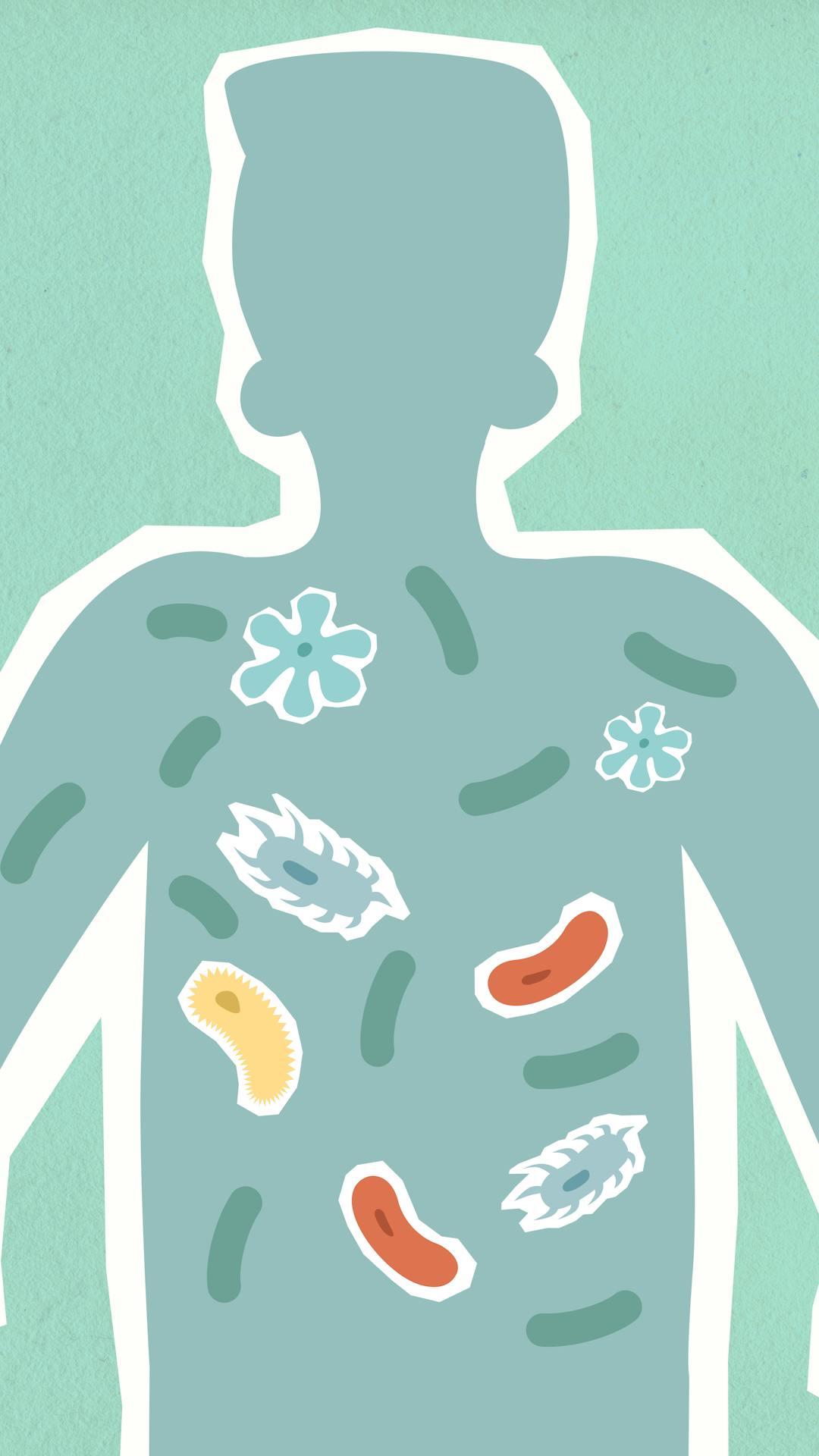
Crohn's Disease is a chronic, transmural inflammation that can affect any segment of the gastrointestinal tract — from mouth to anus, most often the terminal ileum. The current model describes a dysregulated immune response to the microbiota in a genetically predisposed host.
The implicated genes converge on three major pathways: bacterial recognition (NOD2), autophagy (ATG16L1, IRGM), and Th17 adaptive immunity (IL23R). When these pathways fail, Paneth cells and macrophages lose control over the microbiota, and inflammation becomes self-sustaining.
helixXY maps variants at the main loci, contextualizing the genetic risk and providing inputs for an informed conversation with your gastroenterologist.
The three main variants (R702W, G908R, 1007fs) raise risk 3–4× (heterozygotes) and up to 20–40× (homozygotes), and are also associated with ileal and stricturing phenotypes.
The discovery of the IL-23 pathway from the IL23R gene led to the development of ustekinumab and risankizumab — biologics that today change the course of the disease.
Use your file from 23andMe, Genera, AncestryDNA, etc. Within 15 minutes of upload, your report is ready — no new sample required.
Genetics is not destiny. Diet, microbiota, and lifestyle profoundly modulate the course of Crohn's Disease.
Photo by Valeria Boltneva on Pexels
International GWAS with over 75,000 patients have mapped the genetic atlas of Crohn's Disease. helixXY translates that map into your report.
Photo by Edward Jenner on Pexels
helixXY analyzes the best-characterized loci from International IBD Genetics Consortium (IIBDGC) meta-analyses.
The first susceptibility gene identified for Crohn's Disease (2001). NOD2 is an intracellular sensor of bacterial muramyl dipeptide. The three main variants (R702W, G908R, 1007fs) impair recognition of the microbiota and lead to uncontrolled inflammatory response — homozygotes have 20–40× elevated risk.
Essential component of the autophagy complex, responsible for clearing intracellular pathogens and regulating inflammation. The T300A variant (rs2241880) compromises autophagy in Paneth cells of the ileum, creating the cellular substrate for Crohn's Disease.
Interleukin-23 receptor, central to the Th17 pathway of adaptive immunity. Notably, the R381Q variant (rs11209026) is PROTECTIVE — it reduces Crohn's risk by 60–70%. Inspired the development of anti-IL-23 therapies (ustekinumab, risankizumab) now approved for the disease.
Immunity-related GTPase, complementary to ATG16L1 in the autophagic control of intracellular bacteria. IRGM variants alter expression in intestinal epithelial cells, compromising the barrier against the microbiota.
TNF superfamily member, ligand of the DR3 receptor. TNFSF15 variants increase TNF-mediated inflammatory signaling. Particularly relevant in Asian populations, where NOD2 plays a smaller role — exemplifies the ethnic heterogeneity of genetic risk.
Curiously, the R620W variant in PTPN22 — which increases risk for several autoimmune diseases (T1D, rheumatoid arthritis, lupus) — has a PROTECTIVE effect against Crohn's Disease. Demonstrates the complexity of the balance between adaptive and innate immunity in CD pathophysiology.
Additional loci also analyzed: The complete report also includes variants in STAT3, JAK2, CARD9, SMAD3, ZNF365, NKX2-3 and 200+ other smaller-effect loci identified in GWAS meta-analyses.
Photo by Luis Miguel P. Bonilla on Pexels
Knowing your genetic predisposition allows heightened attention to early symptoms — and opens space for informed lifestyle decisions: quitting smoking (the largest modifiable environmental factor for Crohn's), reducing ultra-processed foods, and caring for sleep and stress.
It's not about anxious surveillance. It's about turning data into conscious choices — alongside your gastroenterologist.
An interpreted, contextualized, and actionable report — not just a list of variants.
Variants in bacterial recognition (NOD2), autophagy (ATG16L1, IRGM), and the Th17/IL-23 pathway (IL23R) are analyzed and contextualized.
We combine dozens of loci into a Crohn's Disease Polygenic Risk Score validated in IIBDGC and UK Biobank cohorts of 75,000+ cases.
Each finding comes with literature reference, absolute and relative risk percentages, and context on specific phenotypes (ileal, fistulizing, stricturing).
Variants in IL23R and TPMT/NUDT15 can inform discussions on anti-IL-23 biologic efficacy and thiopurine safety.
As new loci are discovered and guidelines updated, your report is automatically revised — at no additional cost.
Your data is processed with AES-256 encryption in a zero-knowledge architecture. Full GDPR compliance.
Crohn's Disease can evolve slowly. In carriers of high genetic risk, increased attention to persistent symptoms is essential.
Persistent diarrhea for more than 4 weeks, with or without blood. May include mucus and bowel urgency.
Cramping pain, usually in the right lower quadrant (terminal ileum). Often worsens after meals.
Unintentional weight loss from malabsorption and chronic inflammation. May cause growth delay in children.
Disproportionate tiredness, often associated with iron-deficiency anemia from bleeding or malabsorption.
Perianal lesions (fissures, fistulas, abscesses) are a hallmark of Crohn's — affecting ~30% of patients.
Large-joint arthritis, uveitis, erythema nodosum, recurrent oral aphthae — may precede intestinal symptoms.
Our analysis integrates data from the International IBD Genetics Consortium (IIBDGC), UK Biobank, and GWAS meta-analyses with over 75,000 patients — aligned with ECCO, ACG, and AGA guidelines.
Clear, evidence-based answers about genetics and Crohn's Disease.
Important medical notice: The information provided by helixXY is for educational and informational purposes only. It does not constitute a diagnosis, clinical laboratory report, or substitute for medical consultation. The diagnosis of Crohn's Disease requires clinical evaluation, endoscopy/colonoscopy with biopsies, laboratory tests (CRP, fecal calprotectin), and imaging (MR-enterography, CT-enterography) by a gastroenterologist. Always consult a qualified professional.
Upload your genetic file and receive your complete Crohn's Disease susceptibility report in under 15 minutes.
No spam. Cancel anytime.