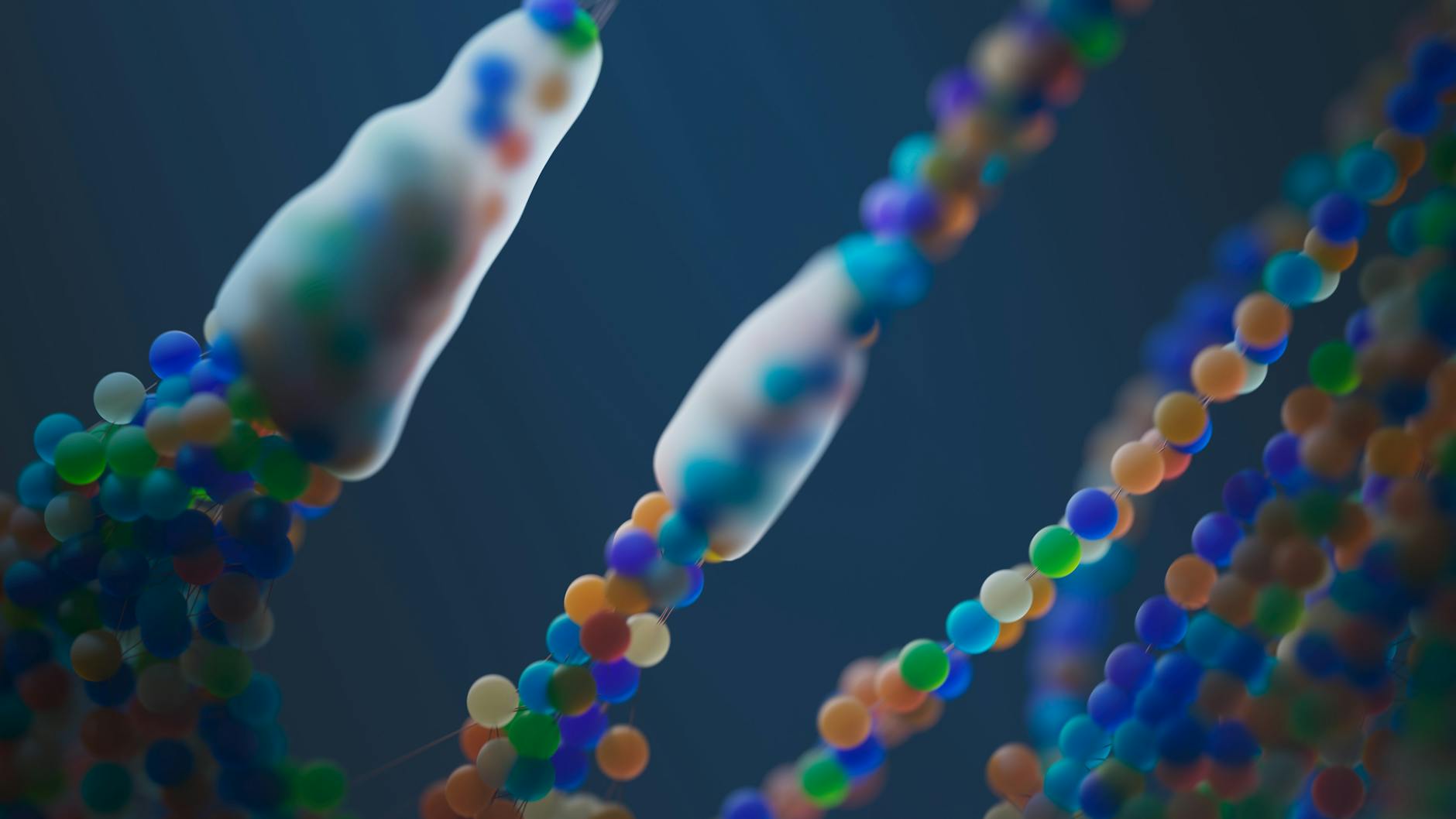
The Tips of Your DNA Know How Old You Are
Imagine that each chromosome in your DNA is a shoelace. At the ends of that shoelace are plastic tips that prevent the material from fraying. In the world of DNA, those tips are called telomeres — repetitive nucleotide sequences (TTAGGG) that protect the ends of chromosomes during each cell division.
The problem is that with each cell division, telomeres become a little shorter. When they reach a critical length, the cell enters senescence (stops dividing) or undergoes apoptosis (programmed cell death). This process is considered one of the primary biological mechanisms of aging — and it is substantially influenced by each person's genetics.
Understanding your telomeres is not mere scientific curiosity: it is a window into your biological longevity, your risk of chronic disease, and the speed at which your body ages at the cellular level.
Key finding: Cohort studies involving more than 100,000 participants have demonstrated that individuals with shorter telomeres have a 25% to 40% higher risk of developing cardiovascular disease, type 2 diabetes, and certain cancers compared to those with longer telomeres — independent of other risk factors.
The Biology of Telomeres: Mechanisms, Genes, and Telomerase
The End-Replication Problem
During DNA replication, the enzyme DNA polymerase cannot fully copy the ends of linear chromosomes — a phenomenon known as the end-replication problem. As a consequence, each cycle of cell division results in the loss of approximately 50 to 200 base pairs from telomeres.
In normal somatic cells (such as those of the skin, liver, or lung), this progressive shortening limits the number of divisions a cell can undergo — the so-called Hayflick Limit, estimated at 50 to 70 divisions for most cell types. When telomeres become critically short, the cell recognizes this as DNA damage and activates checkpoints that prevent further division, resulting in cellular senescence.
The accumulation of senescent cells in tissues over time is directly associated with chronic low-grade inflammation (known as inflammaging), loss of tissue function, and increased risk of age-related diseases.
Telomerase: The Enzyme That Can Reverse the Clock
Nature developed a mechanism to circumvent telomere shortening: telomerase, a ribonucleoprotein enzyme that adds TTAGGG repeats back to telomere ends, compensating — fully or partially — for the loss that occurs during replication.
Telomerase is highly active in stem cells, germline cells (sperm and eggs), and immune system cells, which allows these cell types to divide far longer without significant loss of function. In differentiated somatic cells, telomerase activity is very low or absent — and this is precisely where individual genetics enters the picture.
The TERT Gene: The Catalytic Engine of Telomerase
The TERT gene (Telomerase Reverse Transcriptase) encodes the catalytic subunit of telomerase — the component responsible for synthesizing telomeric DNA. Variants in the TERT gene are directly responsible for inter-individual differences in telomerase activity and telomere length.
Single nucleotide polymorphisms (SNPs) such as rs2736098 in the TERT promoter are associated with significant differences in average telomere length. The lower-activity allele of this SNP has been linked to shorter telomeres and greater risk of telomeric diseases such as dyskeratosis congenita and idiopathic pulmonary fibrosis.
Conversely, variants that increase TERT expression have been identified as protective factors against premature aging in multiple genome-wide association studies (GWAS), but also as potential facilitators of tumor growth — one of the reasons cancer cells frequently reactivate telomerase to achieve replicative immortality.
The TERC Gene: The Telomerase Template
The TERC gene (Telomerase RNA Component) encodes the RNA component of telomerase — the template that guides the addition of TTAGGG repeats. Without functional TERC, telomerase cannot operate correctly, even if TERT is present and active.
Mutations in TERC are established causes of short-telomere syndromes, including aplastic anemia, familial pulmonary fibrosis, and cryptogenic liver cirrhosis. A landmark study published in the New England Journal of Medicine (Armanios et al., 2005) identified that heterozygous TERC mutations cause genetic anticipation — that is, progressively shorter telomeres with each generation, with earlier and more severe clinical manifestations in descendants.
Lower-effect variants in TERC, identified in population studies, also contribute to normal variation in telomere length across the general population.
Other Relevant Telomeric Genes
Beyond TERT and TERC, other genes play critical roles in telomere maintenance and protection:
- TINF2 (TIN2): A component of the Shelterin complex, which protects telomeres from being recognized as DNA damage. Mutations result in critically short telomeres even in young individuals.
- POT1: Binds directly to single-stranded telomeric DNA, regulating telomerase access and protecting telomeres from chromosomal fusions. Variants have been associated with familial melanoma and gliomas.
- DKC1: Encodes dyskerin, required for TERC stability. Mutations cause X-linked dyskeratosis congenita, a short-telomere disease with multisystem manifestations.
- RTEL1: A helicase involved in resolving secondary DNA structures at telomeres during replication. Variants have been associated with familial pulmonary fibrosis and glioblastoma.
| Gene | Primary Function | Impact on Aging | Associated Diseases |
|---|---|---|---|
| TERT | Catalytic subunit of telomerase; synthesizes telomeric DNA | Lower-activity variants accelerate shortening; higher-activity variants extend replicative lifespan | Idiopathic pulmonary fibrosis, dyskeratosis congenita, certain cancers |
| TERC | RNA template of telomerase; guides addition of TTAGGG repeats | Mutations cause progressively shorter telomeres across generations | Aplastic anemia, familial pulmonary fibrosis, liver cirrhosis |
| TINF2 | Component of the Shelterin complex; protects telomeres from DNA damage recognition | Mutations result in very short telomeres regardless of telomerase activity | Severe dyskeratosis congenita, Revesz syndrome |
| POT1 | Binds single-stranded telomeric DNA; regulates telomerase access | Variants associated with genomic instability and tumor predisposition | Familial melanoma, chronic lymphocytic leukemia, gliomas |
| RTEL1 | Telomeric helicase; resolves secondary structures during replication | Variants compromise telomeric integrity and accelerate senescence | Familial pulmonary fibrosis, glioblastoma, Hoyeraal-Hreidarsson syndrome |
"Telomere length is an integrative marker of cellular aging that incorporates both genetic inheritance and the cumulative history of environmental exposures throughout life." — Nature Reviews Genetics, 2015
Lifestyle and Telomeres: What You Can Change
Although genes establish a baseline for telomere length and telomerase activity, research clearly shows that lifestyle has a measurable and significant impact on the rate of telomere shortening. This is one of the most promising areas of aging biology — the idea that you can, to a meaningful extent, influence your own rate of cellular aging.
Diet and Telomeres
The Mediterranean diet — rich in vegetables, fruits, olive oil, fatty fish, and legumes — has been consistently associated with longer telomeres in observational studies. One proposed mechanism is the reduction of oxidative stress: antioxidants in these foods neutralize reactive oxygen species that damage telomeric DNA.
- Omega-3: Higher blood levels of DHA and EPA were correlated with a lower rate of telomere shortening over 5 years (study published in JAMA, 2010).
- Vitamin D: Positively associated with telomere length in multiple studies — possibly by reducing systemic inflammation and excessive cell proliferation.
- Refined sugar and ultra-processed foods: Associated with shorter telomeres, likely by increasing chronic inflammation and oxidative stress.
- Folate and B vitamins: Essential for DNA synthesis and repair; deficiencies have been associated with greater telomeric instability.
Physical Exercise
Regular exercise is one of the lifestyle factors most consistently associated with longer telomeres. A study with more than 5,800 American adults (published in Preventive Medicine, 2017) found that adults with high physical activity levels had telomeres equivalent to those of individuals 9 years younger than their sedentary peers — regardless of body mass index.
The mechanisms include: reduction of oxidative stress, reduction of systemic inflammation, improvement of insulin sensitivity, and — notably — increased telomerase activity in peripheral blood mononuclear cells following moderate-to-intense aerobic exercise.
Psychological Stress and Telomeres
Chronic stress is one of the environmental factors with the most robust evidence for negative impact on telomeres. Researcher Elizabeth Blackburn — awarded the Nobel Prize in Medicine in 2009 for her work with telomeres and telomerase — demonstrated, in collaboration with Elissa Epel, that caregivers of children with serious chronic illnesses had significantly shorter telomeres than non-caregiver controls, with a difference equivalent to 10 years of biological aging.
Chronic cortisol elevates oxidative stress, inhibits telomerase activity, and promotes inflammation — a triple assault on telomeres. Practices such as mindfulness meditation, yoga, and evidence-based stress reduction techniques have shown, in controlled studies, the ability to increase telomerase activity and slow telomere shortening.
Sleep
Chronic sleep deprivation — consistently fewer than 6 hours per night — has been associated with shorter telomeres in multiple studies. Sleep is the period during which the body performs critical DNA repair processes, including telomere maintenance. Adults with untreated chronic insomnia showed, in a 10-year longitudinal study, accelerated telomere shortening compared to good sleepers.
Practical summary: The four lifestyle levers with the best evidence for preserving telomeres are: (1) an anti-inflammatory diet rich in vegetables, fish, and olive oil; (2) regular aerobic exercise (150+ minutes per week at moderate intensity); (3) effective management of psychological stress; and (4) quality sleep of 7–9 hours per night.
What helixXY Can Reveal About Your Telomeres and Longevity
The helixXY personalized genomics platform analyzes variants in the key genes related to telomere maintenance and cellular aging — including polymorphisms in TERT, TERC, and other components of the Shelterin complex — to offer an individualized view of your genetic longevity profile.
Based on this analysis, the helixXY Longevity and Cellular Aging report includes:
- Telomerase activity profile: assessment of variants that influence how efficiently your telomerase compensates for telomere shortening during cell division.
- Genetic predisposition to accelerated aging: identification of variant combinations associated with a higher rate of telomere shortening over a lifetime.
- Personalized gene-environment interactions: how your specific variants respond to lifestyle factors such as diet, exercise, and stress — enabling truly personalized recommendations.
- Relative risk for diseases associated with short telomeres: including cardiovascular disease, type 2 diabetes, pulmonary, and neurodegenerative conditions.
Knowing your genetic longevity profile is not an exercise in fatalism — it is a tool for empowerment. Knowing that you carry variants associated with greater telomere shortening may be exactly the incentive needed to prioritize the lifestyle interventions with the greatest proven impact for your specific profile.
Important: helixXY reports are informational and educational. Consult a healthcare professional before making lifestyle changes based on genetic information.
References
- Blackburn EH, Epel ES, Lin J. Human telomere biology: A contributory and interactive factor in aging, disease risks, and protection. Science. 2015;350(6265):1193–1198.
- Armanios M, Chen JL, Chang YP, et al. Haploinsufficiency of telomerase reverse transcriptase leads to anticipation in autosomal dominant dyskeratosis congenita. Proceedings of the National Academy of Sciences. 2005;102(44):15960–15964.
- Rode L, Nordestgaard BG, Bojesen SE. Peripheral blood leukocyte telomere length and mortality among 64,637 individuals from the general population. Journal of the National Cancer Institute. 2015;107(6):djv074.
- Ludlow AT, Zimmerman JB, Witkowski S, et al. Relationship between physical activity level, telomere length, and telomerase activity. Medicine & Science in Sports & Exercise. 2008;40(10):1764–1771.
- Epel ES, Blackburn EH, Lin J, et al. Accelerated telomere shortening in response to life stress. Proceedings of the National Academy of Sciences. 2004;101(49):17312–17315.