Gut immunogenomics

Inflammatory Bowel
Disease & Genetics

Crohn's and Ulcerative Colitis share ~70% of loci — but diverge where it matters. Your genetics indicates which side of the spectrum you're on.

helixXY analyzes the 6 largest-effect loci: NOD2 (CD), HLA-DRB1 (UC), IL23R (shared and protective), ATG16L1, TNFSF15 and CARD9 — with separate scores for Crohn's Disease and Ulcerative Colitis.

240+
Known loci
~70%
Shared CD/UC
8–10×
Family risk
Abstract 3D organic art — complexity of gut immunity
6 key loci
CD + UC integrated
Separate scores
Crohn vs UC

7M+
People with IBD worldwide
~50%
Twin concordance (CD)
~18%
Twin concordance (UC)
15 min
To receive your report
Spectrum, not dichotomy

Two diseases, one continuum
and your DNA shows the direction

Inflammatory Bowel Disease (IBD) is the name for the spectrum encompassing Crohn's Disease and Ulcerative Colitis. Both result from dysregulated immune response to gut microbiota in genetically predisposed hosts — but differ in location, histological pattern, and genetic architecture.

Crohn's can affect any gastrointestinal segment, is transmural, often strictures/fistulizes. UC is limited to the colon, mucosal, bleeds more. ~70% of the 240+ risk loci are shared, but some are strongly phenotype-specific: NOD2 and ATG16L1 dominate in Crohn's; HLA-DRB1*0103 leans toward UC.

helixXY analyzes the integrated landscape and calculates separate polygenic scores for CD and UC — useful in families with history to infer the most likely phenotype before clinical manifestation.

Crohn's more heritable than UC

Identical twin concordance: ~50% for Crohn's vs ~18% for UC. Reflects the larger weight of genes like NOD2 in Crohn's, and larger weight of environmental factors in UC.

Smoking: opposite effect

Smoking doubles Crohn's risk (and worsens course), but paradoxically protects against UC. Quitting smoking can even trigger UC in former smokers. Complex genetics + environment interaction.

Use your existing data

Use your file from 23andMe, Genera, AncestryDNA, etc. Within 15 minutes of upload, your report is ready — with separate scores for CD and UC.

Woman practicing yoga at home

Stress, sleep, and physical activity profoundly modulate IBD course. For carriers of genetic risk, lifestyle is complementary treatment.

Photo from Pexels

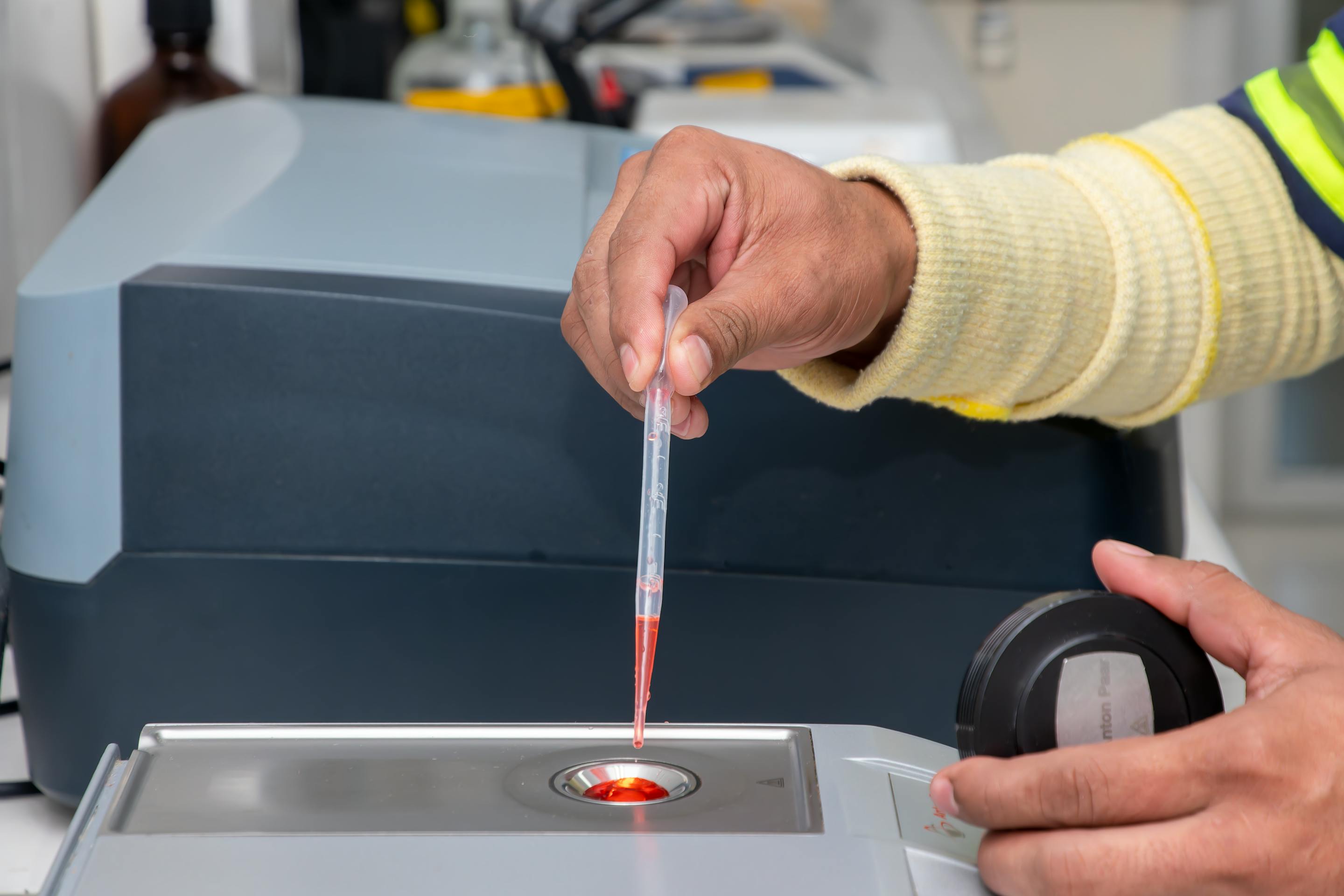
Laboratory technician with multichannel pipette
240+ loci mapped

IBD is the best genetically-characterized complex disease

IIBDGC meta-analyses with over 75,000 patients identified 240+ risk loci — converging on immune pathways (Th17), autophagy, bacterial recognition, and epithelial barrier.

Photo from Pexels

Analyzed genes

The 6 largest-effect loci with CD vs UC differentiation

Coverage of phenotype-anchor genes for each form + the shared genes between Crohn's and Ulcerative Colitis.

NOD2

NOD2

Chromosome 16q12.1

First gene identified for IBD (2001) and the largest-effect locus for Crohn's Disease. The three main variants (R702W, G908R, 1007fs) impair bacterial recognition and antibacterial defense. Homozygotes have 20–40× elevated Crohn's risk. Curiously, virtually absent in Ulcerative Colitis — useful for discriminating the two phenotypes.

Common variants:R702W (rs2066844)G908R (rs2066845)1007fs (rs2066847)
3–4×
OR (Crohn-dominant)
HLA-DRB1

HLA-DRB1

Chromosome 6p21.32

HLA class II region — dominant locus in Ulcerative Colitis, with smaller effect in Crohn's. The HLA-DRB1*0103 allele is associated with extensive and refractory UC. DRB1*1502 modulates anti-TNF response. Reflects the role of adaptive immune response against microbiota antigens.

Common variants:DRB1*0103DRB1*1502rs9264942
2.5×
OR (UC-dominant)
IL23R

IL23R

Chromosome 1p31.3

IL-23 receptor, central axis of the Th17 pathway in IBD. The R381Q variant (rs11209026) is PROTECTIVE against both Crohn's and UC — reduces risk by 60–70%. Inspired the development of anti-IL-23 drugs (ustekinumab, risankizumab) approved for both phenotypes.

Common variants:R381Q (rs11209026, protective)rs1004819rs7517847
0.4×
(protective, CD and UC)
ATG16L1

ATG16L1

Chromosome 2q37.1

Essential component of the autophagy pathway. The T300A variant (rs2241880) compromises Paneth cell function in the ileum — ideal cellular substrate for ileal Crohn's. Crohn-specific effect, with little relevance in UC.

Common variants:T300A (rs2241880)rs10210302rs6431654
1.5×
OR (Crohn-dominant)
TNFSF15

TNFSF15

Chromosome 9q32

TNF-like 1A ligand (TL1A) that signals through DR3 (TNFRSF25). Amplifies T helper-mediated inflammatory response. TNFSF15 variants raise risk for both Crohn's and UC, especially in Asian populations — where NOD2 plays a smaller role.

Common variants:rs7848647rs4263839rs6478108
1.4×
OR (CD and UC)
CARD9

CARD9

Chromosome 9q34.3

Caspase Recruitment Domain Family Member 9 — Th17 signaling adapter and antifungal response. CARD9 variants raise risk for both Crohn's and UC and share association with spondyloarthropathies — explaining the strong association between IBD and joint extraintestinal diseases.

Common variants:rs10781499rs4077515S12N
1.4×
OR (CD and UC)

Additional loci also analyzed: The report also includes IRGM, IL10, IL18RAP, PTPN22, ECM1, STAT3, JAK2, SMAD3, ZNF365, NKX2-3 and 230+ other loci from the International IBD Genetics Consortium (IIBDGC) — with differentiated polygenic scores for CD and UC.

Woman savoring morning coffee

Photo from Pexels

Living well with IBD

Chronic disease
isn't disabling disease

With proper treatment, most people with IBD have productive, normal, and full lives. The new biologics era (anti-TNF, anti-IL-23, anti-integrins) and small molecules (JAK, S1P inhibitors) revolutionized prognosis — and genetics increasingly informs which class will work best.

Knowing your predisposition early enables attention to initial symptoms and early diagnosis — before complications set in. In IBD, time to correct diagnosis is an independent prognostic factor.

How it works

What helixXY delivers

Integrated CD + UC analysis

Mapping of the 240+ shared and phenotype-specific loci, with polygenic scores calculated separately for Crohn's and Ulcerative Colitis.

Phenotype discrimination

We identify genetic inclination toward CD vs UC based on NOD2, ATG16L1, HLA-DRB1, and ECM1 — useful in asymptomatic carriers.

Clear clinical context

Each finding comes with literature reference, phenotype-specific OR, and contextualization for your ancestry.

Pharmacogenomics

IL23R, TPMT, NUDT15 variants can inform response to anti-IL-23, anti-TNF, and thiopurines — valuable discussion with your gastroenterologist.

Continuous updates

As new loci and guidelines (ECCO, ACG, AGA) advance, your report follows — at no additional cost.

Absolute privacy

Your data is processed with AES-256 encryption in zero-knowledge architecture. Full GDPR compliance.

Signs that warrant attention

IBD can manifest slowly. In carriers of high genetic risk, increase attention to persistent symptoms.

Chronic diarrhea

Persistent diarrhea for more than 4 weeks, often with blood (more characteristic of UC) or mucus. May include bowel urgency.

Abdominal pain

Crohn's: cramping in right lower quadrant (terminal ileum). UC: pain associated with defecation, in left lower quadrant.

Rectal bleeding

Bright red blood in stool — more common in UC, present in ~90% of cases. In Crohn's, more frequent with colonic involvement.

Extraintestinal manifestations

Arthritis, uveitis, erythema nodosum, pyoderma gangrenosum, primary sclerosing cholangitis. In ~30% of patients, may precede intestinal symptoms.

Perianal lesions

Anal fissures, fistulas, abscesses — hallmark of Crohn's Disease, rare in UC. Can be the first manifestation in CD.

Growth delay

In children and adolescents with early-onset IBD, growth and puberty delay may be the first sign — even before gastrointestinal symptoms.

Grounded in cutting-edge science

Our analysis integrates data from the International IBD Genetics Consortium (IIBDGC), UK Biobank, and GWAS meta-analyses with over 75,000 patients — aligned with ECCO, ACG, and AGA guidelines.

Peer-reviewed
IIBDGC Catalog
ECCO Guidelines
GDPR Compliant

Frequently asked questions

Important medical notice: The information provided by helixXY is for educational purposes only. Diagnosis of IBD (Crohn's or UC) requires clinical evaluation, endoscopy/colonoscopy with biopsies, laboratory tests (CRP, fecal calprotectin), and imaging by a gastroenterologist. Always consult a qualified professional.

Knowledge is the best
form of prevention

Upload your genetic file and receive your IBD report in under 15 minutes — with differentiated scores for Crohn's and Ulcerative Colitis.

Stay updated and never miss anything.

+1k Join the community

No spam. Cancel anytime.